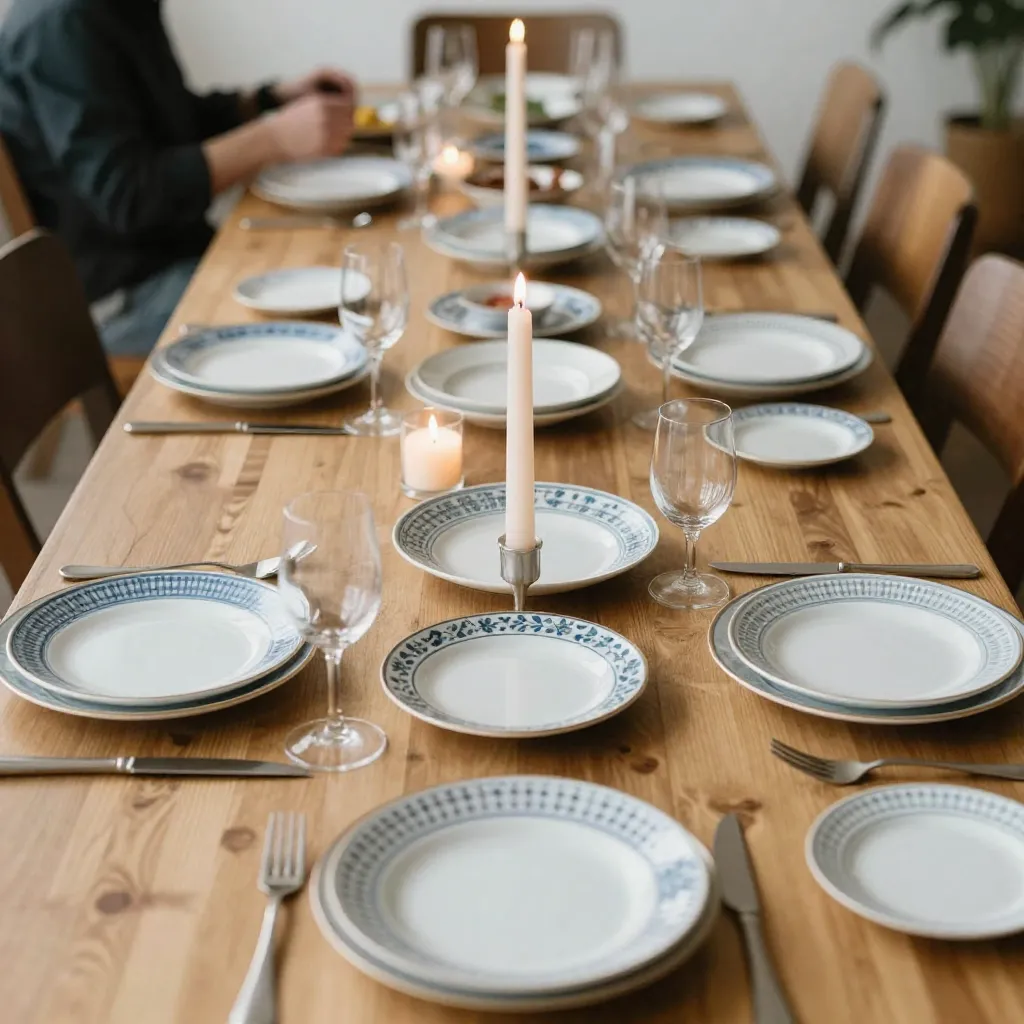
The Anatomy of a Setting
An interactive guide to modern table setting. Understanding placement enhances both function and form—correct placement is aesthetic placement.
Plate Positioning
Foundation Element
Center Point
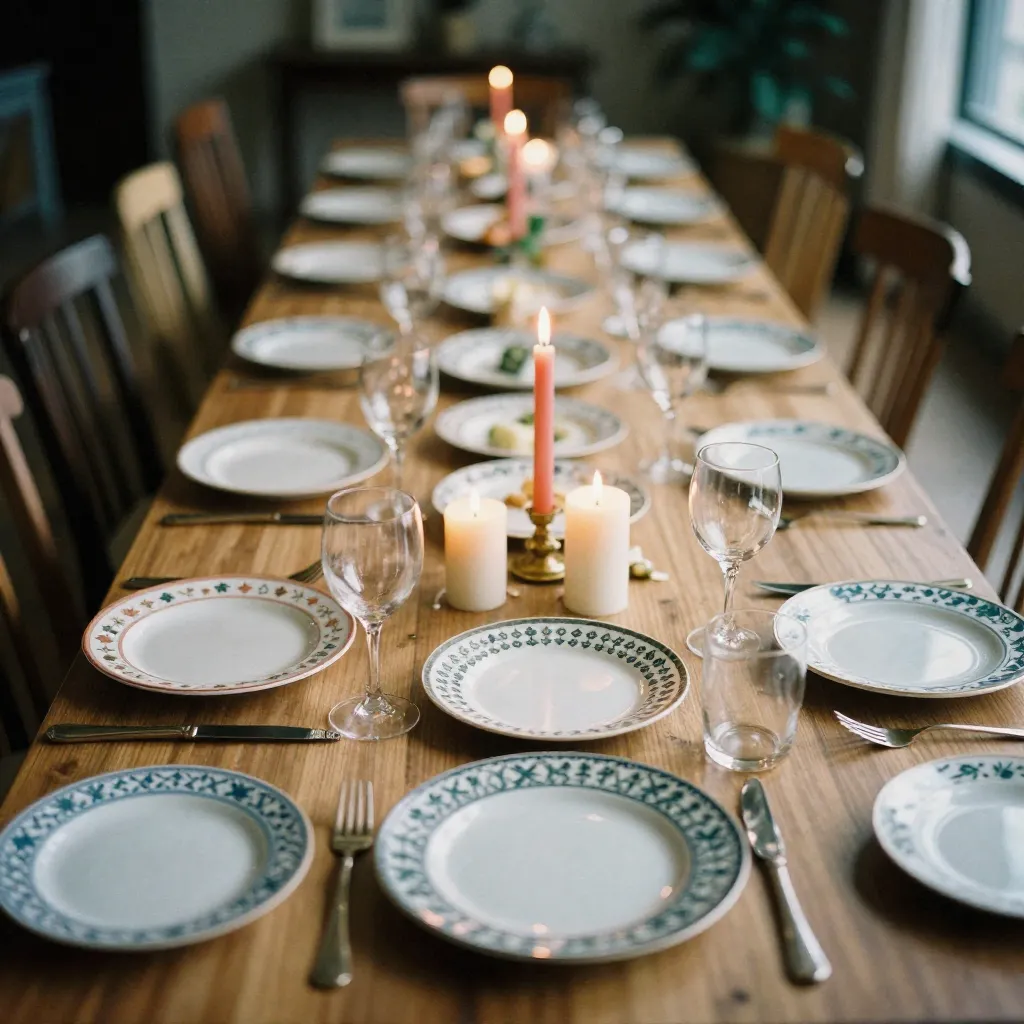
The dinner plate serves as the anchor. It should be centered in front of each chair, approximately one inch from the table edge. This placement provides balance and allows for comfortable reach.
Visual Weight
The plate's position determines the visual center of the setting. All other elements relate to this point, creating a cohesive composition that feels balanced and intentional.
The distance from the table edge is both practical and aesthetic—too close feels cramped, too far feels disconnected from the table's edge.
Flatware Configuration
Functional Geometry
Left Side
Forks are placed to the left of the plate. The dinner fork sits closest to the plate, with salad or appetizer forks positioned to its left. The tines face upward, creating a clean line.
The spacing between forks should be consistent—approximately half an inch apart. This creates visual rhythm and makes each piece easy to identify.
Right Side
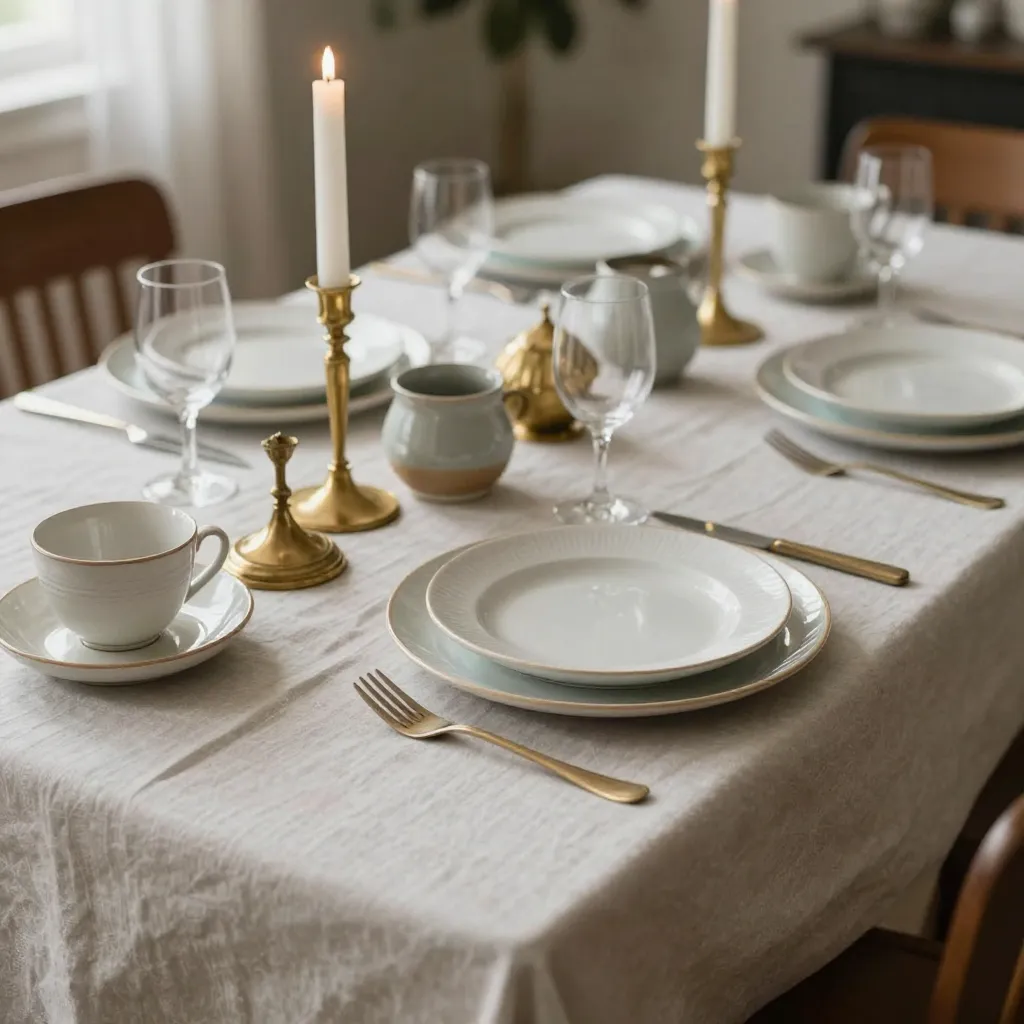
Knives and spoons are placed to the right. The dinner knife sits closest to the plate, with the blade facing inward. Spoons are positioned to the right of knives, with bowls facing upward.
Glassware Positioning
Height & Hierarchy

Above the Knife
Glassware is positioned above and slightly to the right of the dinner knife. The water glass sits closest to the plate, with wine glasses arranged in order of use, moving outward.
Visual Balance
The height of glassware creates vertical interest, balancing the horizontal lines of flatware and plates. The arrangement should feel stable but not rigid—there's room for variation based on the number of courses.
Napkin & Decorative Elements
Finishing Touches
Napkin placement varies by style and formality. It can be placed on the plate, to the left of forks, or in the water glass. Each position creates a different visual effect and communicates a different level of formality.
Decorative elements—centerpieces, candles, place cards—should enhance rather than overwhelm. They contribute to the atmosphere while maintaining the functional clarity of the setting.
The goal is harmony: every element has a purpose, and every placement serves both function and form. When done well, a properly set table is both practical and beautiful.
Learn More
Interested in hands-on guidance? We offer consultations and workshops on table setting principles and modern etiquette.
Request Information